Hello Sword People! Welcome to the Sword Guy podcast. This is your host, Dr Guy Windsor, consulting swordsman, teacher, and writer. Join me for interviews with historical fencing instructors and experts from a wide range of related disciplines, as we discuss swords, history, training, and bringing the joy of historical martial arts into our modern lives.
My guest today is Neil Melville, author of Two-Handed Sword: History, Design and Use, and an avid collector of antique swords. But first, as this show is going out on the last day of 2021, I thought I’d share some thoughts about the year gone by, and some ideas for the year ahead.
It seems that viruses don’t do as they are told. We all though the pandemic would be over long ago, but it’s very clearly still with us. I’m not a virologist or an epidemiologist, so I won’t go into the whys and hows, but suffice to say that there is no sign of things getting back to normal in any reasonable time frame.
I developed an approach to dealing with this (in terms of our own mental health) in 2020, and published it as “Swords in the Time of Corona” which you may find helpful (it’s free).
In short, the key thing for me has been to embrace the idea that swords matter to my people. The practice of swordsmanship is not just good for our physical bodies- because we are who we are, it’s also necessary to our mental health. As a leader of this community, it’s my job to help my people find ways to connect with their practice, despite whatever limitations may be imposed by the world around us.
On a really good day, that may be publishing a book or bringing out a new course. On a bad day, and there have been rather many bad days this year, I might just answer a question from a student, or give some thought to the next blog post, or the next book or course. If it can be expected to make at least one of my sword people feel a bit better, it counts.
So what have I actually got done this year?
The major projects were:
In Audio:
I produced the long-awaited audiobook version of The Theory and Practice of Historical Martial Arts, narrated by Kelley Costigan.
And not one but two audiobook renditions of George Silver’s Paradoxes of Defence, in modern pronunciation, read by Jonathan Hartman, and in Original Pronunciation, read by Ben Crystal. This is peak geek, if you think about it. It’s one of those things that the overwhelming majority of the population have zero interest in, but for the tiny few for whom it was made, it’s like catnip.
I’ve been putting out a new podcast episode every week without fail (largely thanks to the wonderful Katie Mackenzie). This week’s episode is number 86, and I have the next dozen or so either recorded, or the interview scheduled.
On Paper:
I finished and published The Windsor Method: the Principles of Solo Training, which came out in July. The core message of the book is this: find out what works for you, then do that. It’s simple, but not easy, which is why you may need the book!
On Video:
I created the Medieval Sword and Buckler online course, which presents my interpretation of the Royal Armouries manuscript I.33 and takes the student from absolute beginner to competent fencer in that style.
On the Web:
In the beginning, the School was just the Helsinki branch, and swordschool.com was just the website of a small club. But over the last twenty years the school has grown in all sorts of ways, and so I have had Swordschool.com rebuilt from the ground up, as a hub for the entire school. We have even created a fun quiz to help you find the stuff you need.
I also started the Coaches’ Corner, a monthly online get-together for instructors and coaches. It’s been a delight and a solidly useful resource for all of us, I think, and I’m planning to continue it into 2022.
That looks like a quite productive year, especially given the challenges we have all faced. For me one of the hardest things has been not being able to travel. I normally spend about 60 days of the year in other countries, but after getting home from my trip to Australia and New Zealand in November 2019, I didn’t get off this tiny island until November this year. Of all the places I could have gone, it’s only right and natural that I went home to Helsinki, and spent some time with my friends, and a full weekend teaching at the Helsinki branch of the School. It was profoundly restorative, and I’m very glad it happened to sneak through in the lull between Delta and Omicron. I’ve no idea when the next trip will be, but fingers crossed for 2022.
The Best Bits of 2021
Other than the Helsinki trip and publishing the books and the course, the peaks of this year were all unrelated to swords.
I managed to spend a weekend with my youngest relatives, Hector and Maxine, who live in Abu Dhabi but came to the UK for Christmas. They are 6 (nearly 7) and 5, and I haven’t seen them since they were 4 and 2. I got to practice Tick-Tock-Bong! With both of them. If you don’t know what Tick-Tock-Bong! is , there’s an explanation here. It was great to see the rest of the family too, of course (teaching sabrage to my sister in law Nadine was great fun), but nothing compares to the shrieks of glee of small children.
While in Helsinki I got to spend time with both my god-children. Otso and I reprised ‘Guy and Otso’s day of fun’ from my last trip in 2019, and this time we did an escape room-type experience, and went indoor-skydiving. And my goddaughter Venla has turned 18 so I took her out to dinner and introduced her to single-malt whisky and cognac (no not in the same glass, I’m not a monster!). She also had a go at a decent cigar. I take my god-parenting very seriously!
Ten years ago, I had a trial flying lesson in a light aircraft, and was hooked, but too broke to pursue it. But this year I said ‘fuck it’, and am learning to fly. As this goes out I’ll have had my fourth lesson, and be on my way towards getting my private pilot’s licence. It is a fabulous experience, in all sorts of ways. I’ve written before about the need for senior instructors to re-connect with their beginneriness. I find that it’s very helpful to my own teaching to be overwhelmed and out of my depth learning something new every now and then, as it reminds me what my own beginner students are experiencing. I don’t think I’ve ever felt more of a beginner than I do flying a plane. There is just so much stuff to pay attention to, and the consequences of failure can be fatal. The key to success, I think, is finding the right instructor; someone whom you instinctively trust to keep you safe while you learn the skills to keep yourself safe. I’ll be writing this up in much more depth in due course, but I need to think about it longer, and get more flying lessons in first.
Plans for 2022
So what’s coming up in 2022? The projects I’m currently working on, or at least thinking about, are:
A book on how to teach historical martial arts, or anything else. I’ve spent the last 20 years not just teaching swordsmanship, but actively developing my teaching skills, and I think I’ve got the basic principles down. If I can find a way to make the book into an online course as well, I will, but I can’t currently see how to do it.
My morning trainalong sessions have been a mainstay of my physical and mental health since I started them back in June 2020. I started them so that I wouldn’t need self-discipline to actually get my training done, but they have developed into both a vehicle for developing the health and fitness side of my training, and a lovely bit of social interaction. There is a simply gigantic range of possible exercises, including strength, flexibility, power generation, breathing, meditation, and so on. I’ve been studying these things for about 30 years now, and so I select from the range instinctively, based on how my body is feeling, and adapt the exercises as needed. It occurred to me that I should document this body of knowledge, and that the best way to do that may be an online video course. There is way too much stuff to put into a book, and much of it is movement, so is easier to communicate through video. The Finnish word for exercise done for the sake of health and fitness is “Jumppa” (the dictionary translation into English is ‘physical jerks’). So I am planning to produce an online course of Jumppa.
The podcast will continue for the foreseeable future. It’s not just good fun- my goal with it has always been to enable you to hear from a diverse range of guests. It is intended to promote diversity in historical martial arts. One of the biggest problems many students face is that swords are expensive, and experienced instructors are too (or at least, they should be). My most ambitious goal for 2022 is to do something about that. Here’s my thought:
There are many groups in the world that would benefit from direct in-person instruction from me, but they can’t possibly afford the flights, let alone my fees. I either teach for full-whack, or for free. I don’t charge for my time at events like Swordsquatch, and I teach free classes for groups or clubs that can’t reasonably be expected to pay. My standard approach in the latter case is to ask for a donation to be made to the charity of my choice (usually Room to Read).
The School as a whole is doing pretty well, to the point that I can just about afford flying lessons (which your Patronage really helps with! thank you). So, what if we took the income from one month of Mastering the Art of Arms subscriptions, and used that as a fund to cover the expenses, such as flights, hall hire if necessary, and so on? I’d teach unpaid, and any money left over could go to a local charity chosen by the hosting sword club. Ideally this would be in the kind of place where dollars are especially valuable. The school makes its income in dollars, and a dollar in Lima or Jakarta is worth a lot more than a dollar in New York.
For this to work, we’ll need the following things:
1. An application process for clubs, which would include details of their club, what they’d want me to cover in the seminar, and details of the local cause they’d like to support with any leftover cash.
2. A board of I think three respected members of the community to select the winning application. It can’t be just down to me, or indeed any one person. I also think it’s important that the club does not need to be previously affiliated with the School in any way.
3. Advance notice of which month’s income we’d use- ideally it would generate some extra subscriptions and/or donations. I’m thinking of March, because it’s the birthday month of the School.
4. Absolute transparency in regard to how much money is raised, and where exactly it goes.
Another possibility would be to use a portion of the money (perhaps 60%) to buy equipment for the club, with the rest going to the local good cause. That would be a lot simpler logistically- it wouldn’t involve co-ordinating the weekend, organising the seminar, booking flights, etc., and is a lot more virus-proof.
Organising this kind of thing entirely new to me, so if you have any relevant experience, or advice, I’m all ears.
Now, on with the show!
The Two Handed Sword with Neil Melville
The Sword Guy Podcast episode 86

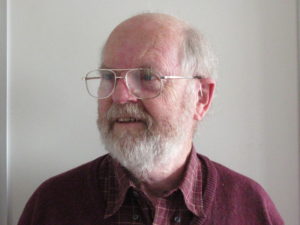
In this episode we welcome Neil Melville, author of The Two-Handed Sword History, Design and Use. So of course we talk about two-handed swords. How do we decide what is a true two-handed sword? What is the difference between a longsword, a bastard sword, a zweihander and a montante? And how were these enormous swords used?
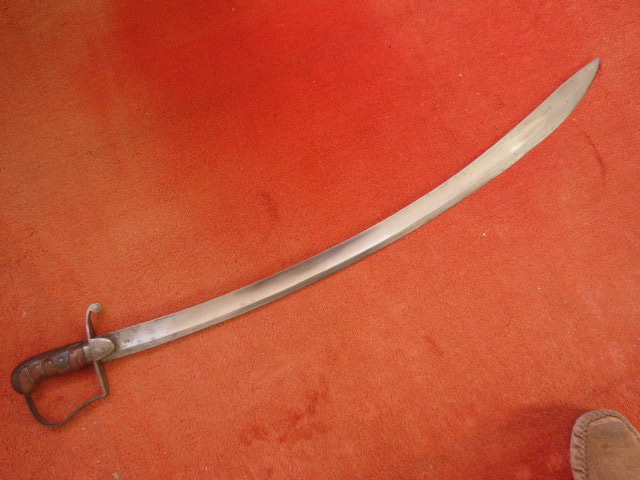
Neil has been collecting swords since he bought his first sword in an antique shop in the 1960s. Here are some pictures for you to drool over:
Neil’s first sword (1796 Light Calvary, bought 1968 for £3):
and his 2 two-handers, Swiss c.1540:


and Italian c.1590:


(The grips of the Light Calvary and the Italian have both been replaced.)
You won’t find Neil on any social media, but you can support him in the good old way of going out and buying his book, which is available in the usual places. Two-Handed Sword History, Design and Use.